Empreinte carbone produit : la précision à grande échelle
Déployez des résultats d'ACV et d'empreinte carbone produit à l'échelle de l'ensemble de votre portefeuille pour accélérer la décarbonation et développer vos revenus issus de produits bas carbone.
Face à la demande croissante en données PCF et aux réglementations produit en constante évolution, les entreprises ont besoin d'une visibilité claire sur les impacts du cycle de vie de leurs produits. Pourtant, les outils d'ACV traditionnels, conçus pour l'analyse produit par produit, peinent à s'adapter à l'échelle d'un portefeuille entier.
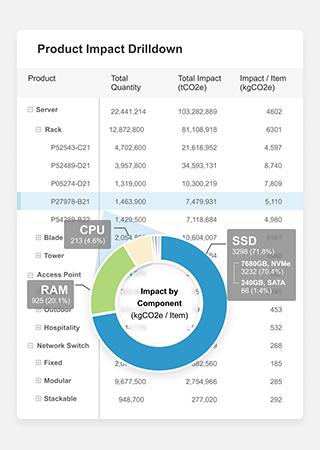
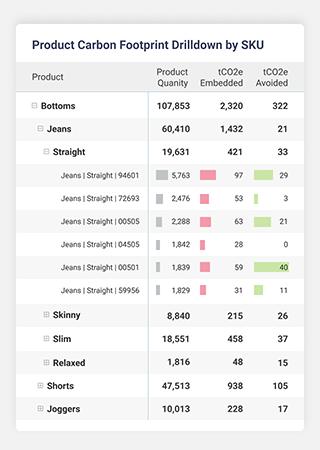
AITrack répond à ce besoin : notre solution produit rapidement des résultats d'ACV et de PCF pour des milliers de références, vous permettant d'identifier les principaux postes d'impact au niveau des composants et d'accélérer votre décarbonation. Ces résultats sont conformes aux normes ISO et aux exigences de reporting produit, notamment le passeport numérique des produits (DPP) de l'UE.
ACV, scénarios, reporting et conformité : la solution AITrack pour l'empreinte carbone produit
AITrack en action
Étude de cas : leader mondial des technologies d'entreprise
Une entreprise technologique du classement Fortune 500 s'est associée à AITrack pour calculer l'empreinte carbone de ses produits sur 90 000 références et plus de 250 000 composants, avec une évaluation cohérente aux niveaux produit et entreprise.
Grâce à AITrack, cette entreprise a pu :
- Permettre à ses équipes commerciales de remporter des appels d'offres concurrentiels grâce à des résultats PCF disponibles à la demande.
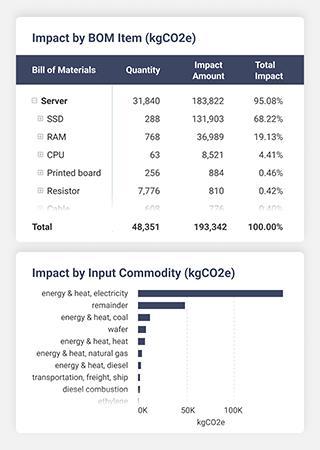
- Identifier les principaux postes d'émissions au niveau des composants pour décarboner la chaîne d'approvisionnement de manière ciblée.
- Multiplier par trois la vitesse de production des rapports et réduire les coûts de 90 % par rapport aux méthodes traditionnelles de calcul des PCF.
AITrack : une approche différente du calcul de l’empreinte carbone des produits (PCF)
- Identifiez les causes profondes de l'impact : nous vous aidons à construire l'empreinte carbone de vos produits à partir de modèles d'ACV fondés sur les données d'activité, adaptés aux matériaux, processus, technologies et sites propres à chaque produit. Vous pouvez ainsi identifier les facteurs sous-jacents à l'origine de l'impact et cibler vos actions là où elles comptent.
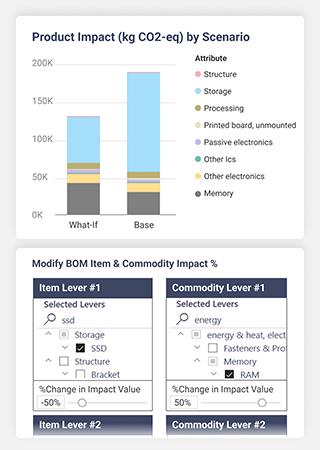
- Montez en puissance plus rapidement : nous produisons des ACV détaillées pour des milliers de produits en quelques mois. Cette modélisation évolutive vous permet de tester des scénarios à l'échelle du portefeuille, de quantifier le potentiel de réduction et de prioriser les actions à fort impact pour atteindre vos objectifs.
- Transformez les empreintes en livrables exploitables par vos clients : Nos experts en ACV travaillent à vos côtés pour vous fournir des résultats PCF dans les formats et périmètres de votre choix, directement intégrables à vos processus de vente, de reporting et de réponse aux demandes clients.
Découvrez les données, la technologie et l'expertise au cœur d'AITrack
Solutions AITrack connexes

Foire aux questions
-
Qu'est-ce que l'empreinte carbone d'un produit, et en quoi diffère-t-elle de l'empreinte carbone d'une entreprise ?
L'empreinte carbone d'un produit (PCF) mesure les émissions de gaz à effet de serre (GES) associées aux composants, matériaux, processus et étapes du cycle de vie d'un produit spécifique. Selon le périmètre retenu, cela peut couvrir les émissions de l'extraction des matières premières jusqu'à la sortie d'usine, ou s'étendre jusqu'à la distribution, l'utilisation et la fin de vie du produit.
L'empreinte carbone d'une entreprise, quant à elle, mesure les émissions à l'échelle de l'ensemble de l'organisation et de sa chaîne de valeur. Elle englobe des sources aussi diverses que les installations, les flottes de véhicules, les déplacements professionnels, les investissements, l'utilisation des produits vendus ou encore les biens et services achetés.
En résumé, l'empreinte d'entreprise révèle donc où les émissions se produisent dans l'activité, tandis que l'empreinte produit identifie ce qui les génère à l'échelle de chaque produit. -
Quelle est la différence entre une analyse du cycle de vie (ACV) et l'empreinte carbone d'un produit (PCF) ?
L'empreinte carbone d'un produit (PCF) mesure les émissions de gaz à effet de serre (GES) associées à un produit tout au long de son cycle de vie, de l'extraction des matières premières en amont jusqu'à la distribution, l'utilisation et l'élimination.
L’analyse du cycle de vie (ACV) couvre quant à elle un périmètre plus large : elle évalue l'impact environnemental global d'un produit en intégrant non seulement les émissions de GES, mais aussi ses effets sur l'air, l'eau, les sols et l'utilisation des ressources. En ce sens, la PCF est un type spécifique d'ACV, centré sur les seules émissions de GES. -
Quelle méthodologie d’ACV AITrack utilise-t-il ?
AITrack utilise des modèles d’ACV personnalisés, fondés sur les données d'activité et adaptés aux matériaux, processus, technologies et sites propres à chaque produit. Contrairement aux méthodes fondées sur les dépenses, cette approche identifie les causes profondes des impacts produits jusqu'au niveau du site, du matériau, de l'activité et du composant, en suivant les inventaires complets des intrants et des extrants tout au long du cycle de vie
Concrètement, cette méthodologie offre une vision détaillée et exploitable des impacts produits, en aidant les entreprises à identifier les principaux postes d'impact, à prendre des décisions plus éclairées en matière de conception et d'approvisionnement, et à orienter l'engagement fournisseurs vers des actions de décarbonation ciblées. -
Comment AITrack étend-il l'analyse du cycle de vie à de vastes portefeuilles de produits ?
AITrack permet de déployer l'ACV fondée sur les données d'activité à l'échelle du portefeuille, en s'appuyant sur une méthodologie propriétaire, une base de données sectorielle de référence et une plateforme logicielle robuste.
Avec plus de 500 000 activités industrielles, énergétiques et agricoles couvertes à l'échelle mondiale, notre base de données permet à vos équipes d'élaborer des modèles de produits détaillés plus rapidement et avec une cohérence accrue.
Notre approche de modélisation permet par ailleurs d'appliquer simultanément à des milliers de produits des modifications telles que des substitutions de matériaux, le recours aux énergies renouvelables ou des mises à jour de consommation d'énergie. À la clé : des tests de scénarios à l'échelle du portefeuille, des analyses des principaux postes d'impact et une différenciation des produits bas carbone, sans remodélisation manuelle produit par produit. -
Quelles données utilise AITrack pour calculer l'empreinte des produits ?
AITrack intègre des données primaires provenant des clients et de leurs fournisseurs : nomenclatures (BoM), spécifications de produits, consommation d'énergie, déclarations environnementales de produits (EPD), bons de commande, enquêtes fournisseurs, etc. Ces données peuvent être collectées via des intégrations API, des téléchargements de fichiers ou notre solution Supply Chain Engagement, qui permet aux fournisseurs de partager leurs données existantes ou de calculer l'impact de leurs propres produits.
Nous nous appuyons également sur notre propre base de données ACV, référence du secteur, qui couvre les activités industrielles, énergétiques et agricoles issues de plus de 300 sources. Celle-ci permet de combler les lacunes en matière de données et de construire une base analytique fiable pour orienter les actions collaboratives, améliorer la qualité des données et affiner les évaluations produit au fil du temps. -
Combien de temps faut-il pour obtenir les résultats relatifs à l'empreinte environnementale d'un portefeuille de produits ?
AITrack produit des résultats d'empreinte détaillés pour des milliers de produits en quelques mois, conformément aux normes ISO 14067 et ISO 14040/14044. Le délai précis varie selon la taille du portefeuille, la disponibilité des données et la complexité des produits.
Cette rapidité repose sur notre collecte de données évolutive, nos traitements automatisés et notre expertise en ACV, qui nous permettent de traiter des centaines, voire des milliers de produits en parallèle, avec cohérence et précision à l'échelle du portefeuille.