Dynamic Mitigation Strategy Planning
Turn corporate inventory data into adaptive decarbonization roadmaps that prioritize high-impact actions and optimize ROI.
Once companies understand where their Scope 1, 2, and 3 emissions and other environmental impacts are concentrated, they need a clear way to turn insights into concrete action. Static plans can quickly become outdated as business activities, data and targets evolve.
AITrack helps you build dynamic mitigation strategies directly linked to your corporate inventory. From selecting the right initiatives and testing scenarios to prioritizing resource allocation, AITrack supports end-to-end decarbonization planning across your value chain. With roadmaps that evolve with your business, AITrack helps you coordinate stakeholder action, optimize return on investment (ROI), and demonstrate clear progress toward targets.
How AITrack supports dynamic mitigation planning
AITrack in action
Case study: Leading global apparel company
A leading apparel brand with 200+ supplier facilities partnered with AITrack to develop a corporate GHG inventory using custom LCA models. They evaluated 100+ decarbonization projects to build an actionable pathway toward their targets.
Thanks to AITrack, this company:
- Identified emissions hotspots in high-impact textile production processes, such as fabric dyeing
- Enabled teams to design customized interventions using guided modeling workflows
- Developed an ROI-driven decarbonization roadmap that adapts to data and product updates
What sets AITrack apart for mitigation strategies
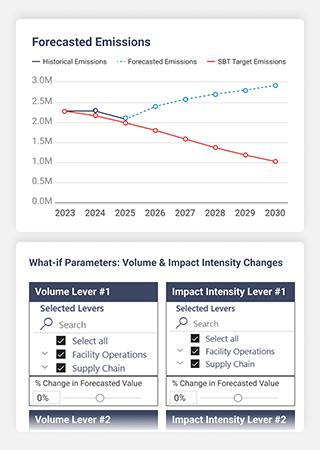
- Turn hotspots into measurable action: We develop your custom, interactive mitigation strategy tool based directly on your corporate inventory. This way, you can target the highest-impact materials, energy sources, components, and activities, and then track how specific improvements change your footprint and progress toward targets.
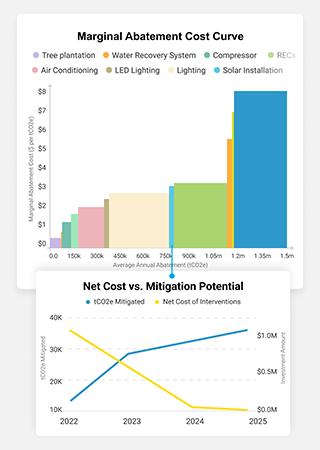
- Invest where it matters most: We equip you to evaluate and prioritize mitigation options by emissions reduction potential and financial metrics (costs or savings) using dynamic MACCs, so you can direct resources to the actions with the greatest impact.
- Keep your roadmap dynamic: We enable you to refine decarbonization strategies in real time as your business, data, and technology evolve. With AITrack, you can incorporate up-to-date input from decentralized teams and suppliers to maintain a relevant, actionable climate transition plan.
Explore the integrated data, software, and expertise behind AITrack
Related AITrack Solutions



Frequently asked questions
-
How does AITrack enable users to connect mitigation projects with corporate footprint data?
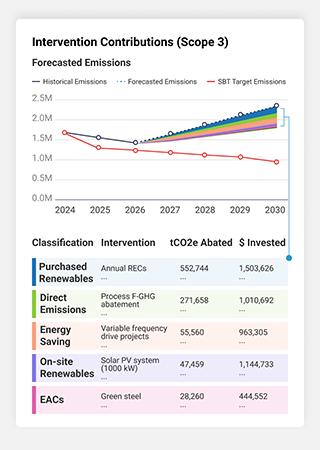
AITrack models mitigation projects directly from the corporate inventory data used for Scope 1, 2 and 3 emissions and other environmental impacts. With AITrack’s guided tool, users can select specific slices of the inventory by product, facility, supplier region, or for upstream activities in the value chain. Users can swap materials, change energy sources, adjust activity volumes, or change emission intensities, defining each mitigation project specific to their products and value chain. Potential interventions are then stacked to show the total projected contribution to the mitigation roadmap.
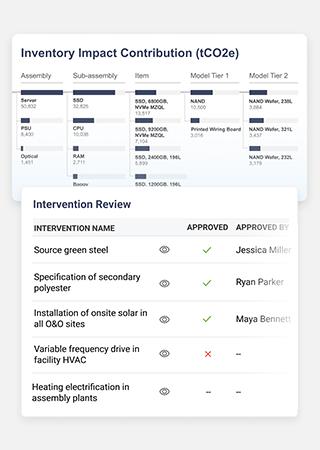
AITrack also supports user permissions and approval workflows to scale engagement across the company, helping teams turn inventory insights into measurable, collaborative mitigation actions. -
What is a marginal abatement cost curve, and how does it support decarbonization?
A marginal abatement cost curve (MACC) helps companies compare mitigation options by showing both the emissions reduction potential and the cost or savings per unit of emissions reduction for each project. For example, a MACC can compare initiatives such as renewable energy adoption, energy efficiency upgrades, material substitutions, supplier commitments, or the application of Environmental Attribute Certificates (EACs) to upstream activities. This helps companies identify which actions can deliver the greatest impact at the lowest cost.
-
How does AITrack help build the most cost-effective mitigation roadmap using MACCs?
AITrack uses dynamic MACCs to rank mitigation actions based on abatement potential linked to the corporate inventory, along with associated costs or savings.
Users can compare how different combinations of projects support progress against targets under scenarios with varied budgets, forecast periods, and discount rates. As business conditions, data, and technologies evolve, teams and suppliers can update inputs in real time, helping companies continuously refine their roadmap and focus resources on the actions with the greatest impact and return. -
How does AITrack track mitigation progress in a corporate inventory?
AITrack tracks progress by linking each mitigation action back to the relevant corporate inventory data and underlying LCA models. As projects are implemented, users can update actual activity data, supplier inputs, material changes, energy sources, or process improvements using our structured workflow.
Updates are reviewed and validated by the organization’s central admin team before they are reflected in the corporate inventory and mitigation roadmap. This helps companies translate mitigation projects distributed across teams, suppliers, facilities, and product lines into measurable and auditable progress toward sustainability targets.