
EUDR Is Only the Beginning: Preparing for the New Nature Economy
Global supply chains are entering a new era in which businesses face growing expectations to understand not only what they source, but where products come from and how their production impacts nature.
The EU Deforestation Regulation (EUDR) is one of the clearest signals of this shift. Designed to reduce the EU’s contribution to global deforestation and forest degradation, as well as associated greenhouse gas emissions and biodiversity loss, EUDR introduces new expectations around traceability, due diligence and supply chain transparency.
But EUDR readiness is more than collecting data. Businesses need robust due diligence systems and reliable evidence across complex supply chains. This makes both preparation and independent assurance increasingly important.
What Does EUDR Require?
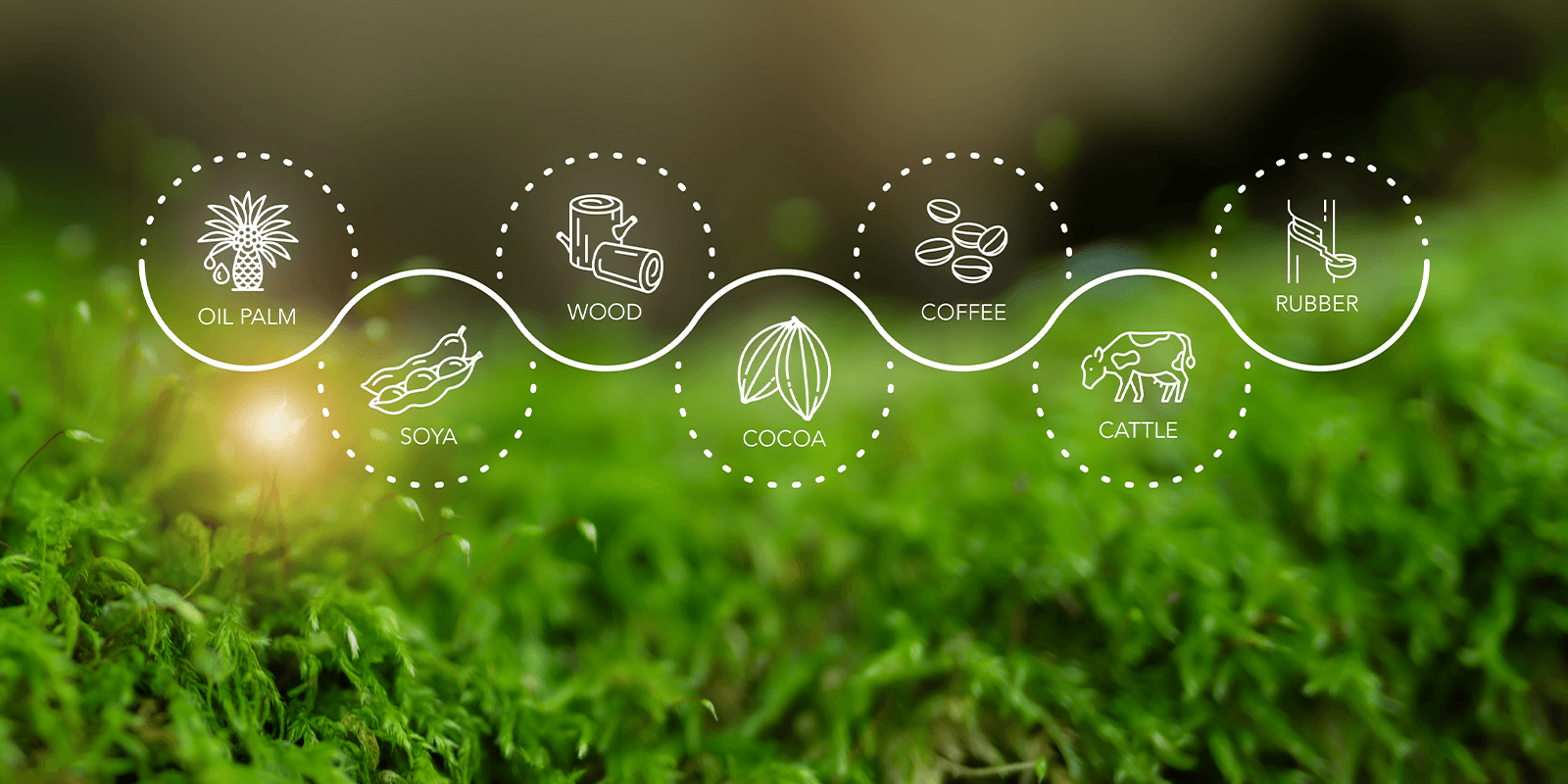
EUDR covers seven commodities: cattle, cocoa, coffee, oil palm, rubber, soya and wood, as well as relevant derived products included in the current Annex I. The new products added to the scope of EUDR by Commission Delegated Regulation (EU) 2026/2102 will become subject to the Regulation from 30 December 2027, to allow businesses sufficient time to prepare. This includes soluble coffee, certain palm oil derivatives and frozen cattle tongues.
Under the Regulation, relevant products must meet requirements relating to deforestation-free production, be produced in compliance with relevant legislation in the country of production, and be covered by the applicable due diligence obligations.
The Regulation applies from 30 December 2026 to large and medium operators, as well as micro and small operators already covered by the EU Timber Regulation (EUTR), and from 30 June 2027 to other micro and small operators.
Businesses should therefore carefully assess their role and obligations under the latest regulatory framework rather than treating EUDR as a uniform requirement across every actor in the value chain.
Why Traceability Matters Beyond Compliance?
For many companies, one of the biggest challenges will be achieving sufficient visibility across complex, multi-tier supply chains.
Organizations need to understand where relevant commodities originate and whether the information received from suppliers is sufficiently reliable to support their due diligence.
This makes supplier engagement, traceability systems, data quality and effective governance increasingly important.
Stronger supply chain visibility can also create value beyond EUDR readiness. It can help businesses better understand sourcing risks, strengthen supplier relationships and support more informed procurement decisions. As expectations around biodiversity, nature-related risks and responsible sourcing continue to develop, the capabilities established for EUDR can provide a foundation for broader nature strategies.
For procurement and supply chain teams, improved traceability can support better sourcing decisions and supplier engagement. For sustainability and risk teams, it can provide better visibility of potential nature-related risks across the value chain.
The result is a shift from viewing traceability solely as a compliance exercise towards seeing it as an increasingly important element of supply chain resilience and responsible sourcing.
Certification Can Support EUDR Due Diligence, but Does Not Replace It

Existing certification and third-party verification schemes can have an important role in supporting companies as they prepare for EUDR.
However, the distinction is critical: certification should not be presented as a substitute for an operator’s EUDR due diligence obligations.
Article 10(2) allows certification or other third-party-verified schemes to be considered in risk assessment. Existing schemes can therefore provide useful supporting evidence, but responsibility for meeting EUDR obligations remains with the relevant operator.
Several certification schemes have developed EUDR-aligned approaches or tools to help organizations generate or access relevant evidence. For example, Rainforest Alliance provides EUDR-aligned requirements and access to data, including precise geodata, intended to support companies with their obligations for certified cocoa and coffee supply chains. Forest Stewardship Council (FSC) likewise provides specific guidance explaining which elements of its certification system may support EUDR obligations, and which requirements businesses still need to address themselves.
This distinction creates an important role for independent assessment: helping organizations determine whether the systems, evidence and controls operating across their supply chains are working as intended.
From EUDR Readiness to Independent Assurance
Preparing effectively for EUDR requires two complementary capabilities: establishing an effective due diligence system and independently assessing supply chain conformity and evidence. Bureau Veritas can support organizations across both.
-
EUDR Advisory and Readiness
Our advisory approach can support businesses in establishing and strengthening the systems required for EUDR readiness, including:
- Gap Assessment and Diagnostic: Assess existing processes and identify priority gaps, supported by a practical remediation roadmap.
- EUDR Due Diligence Implementation: Support the development and implementation of due diligence processes covering data collection, traceability, risk assessment and risk mitigation where required.
- Pre-assurance Readiness: Review existing systems and supporting evidence in preparation for an independent assessment, identify areas requiring improvement.
- Team Training: Build understanding of EUDR requirements, responsibilities and business obligations across relevant functions.
EUDR Advisory and Readiness -
Supply Chain Conformity Audits
Beyond readiness, independent audits can provide greater confidence in the systems and evidence underpinning an organization’s EUDR approach.
Bureau Veritas can conduct supply chain conformity audits, assessing traceability and relevant evidence across the supply chain against defined criteria.
For businesses operating across multiple sourcing regions and large supplier networks, independent assessment can help identify inconsistencies or gaps before they become more significant supply chain risks.Supply Chain Conformity Audits -
Certification and EUDR-Related Schemes
For supply chains already operating under recognized sustainability certification schemes, existing certification infrastructure may provide useful supporting evidence for EUDR due diligence.
Bureau Veritas can provide audit and certification services associated with relevant schemes and their EUDR-related requirements, including, where applicable such as: Forest Stewardship Council (FSC), Programme for the Endorsement of Forest Certification (PEFC), Rainforest Alliance, Roundtable on Sustainable Palm Oil (RSPO), and Round Table on Responsible Soy (RTRS).
These schemes can support the collection and verification of relevant supply chain evidence through systems suppliers may already use. However, certification and EUDR-related modules should form part of a wider due diligence approach rather than be regarded as proof of EUDR compliance in themselves.Certification and EUDR-Related Schemes -
Building Responsible & Resilient Supply Chains – Creating a Supply Chain of Trust
EUDR presents an opportunity for organizations to strengthen how they understand and manage their supply chains.
The challenge is not simply collecting geolocation coordinates or supplier declarations. It is establishing the governance, traceability, reliable evidence and supplier collaboration needed to understand what is happening across complex global value chains.
Bureau Veritas brings together advisory, independent auditing and certification expertise to support organizations across this journey, from assessing readiness and strengthening due diligence systems to independently evaluating supply chain conformity and leveraging relevant certification schemes.
As expectations around nature, biodiversity and responsible sourcing continue to evolve, these capabilities can create value beyond regulatory readiness. Organizations that establish credible traceability and due diligence systems today can be better equipped to manage sourcing risks, strengthen supply chain resilience and respond to the emerging nature economy.Building Responsible & Resilient Supply Chains – Creating a Supply Chain of Trust
Beyond EUDR: What’s Next for Nature?
Discover the bigger picture. Our upcoming Nature Guide will explore the emerging expectations shaping how businesses understand, manage and respond to nature-related impacts and risks.